
Are you non-technical and want to build a Smart Home?
First and foremost, before considering what technical solution to choose, it is essential to understand what you want to achieve. However, most people tend to look at the available technology and then determine how it can fit into their lives.
During the last twelve months, I have delved into the fragmented DIY smart home market in Australia. Unfortunately, there are too many products that do not integrate with each other, and no end-to-end solution from a single vendor. From my conversations with staff at popular stores like JB HiFi, OfficeWorks, Harvey Norman, and Bunnings, they are selling smart home products without any help from the sales staff. The showcases built by Amazon and Google are broken and do not work. The vendors are not fixing the showcases, and sometimes the staff members do not have the knowledge to do so, and as the products are selling well without them no one learns or fixes the broken showcases.
If you are a non-technical person who wants to have a smarthome with integration for cameras, lights, garage doors, locks, gates, TVs, and sound systems, my recommendation is to opt for a commercial solution and have a Systems Integrator install it for you. They will ensure it works correctly and train you on how to operate it. Some downsides include that it may cost you a considerable amount of money upfront and if you want to change any element you will need them to come back and make the changes, as another cost.
However, for those who want to play and build their own solution, read on.
I have observed that some electricians, which we require to do any electrical work here in Australia, have started to installed basic lighting or power control devices into homes as part of a refit or new build. These are not System Integrators, but it is exciting nonetheless. In the past few months, some friends have had electricians install smart home items and have shown me apps on their phones, which they have no idea how to use other than to turn on and off a light or water feature. It has not been explained and do not realise that they can expand their smart home within that app. I feel this is the lack of knowledge from the electrician, and they are just doing what is asked and not seeing the potential.
In Australia, we have a smaller market than the US, and most vendors have not gone to the effort of certifying their products here. Additionally, we use 240V instead of the US’s 110V, plus as stated earlier, it then requires an electrician to do any electrical or lighting work, which adds costs and effort and creates another barrier.
This situation means that most vendors use the fastest and least expensive way to enter the market. Nine times out of ten, they white-label the Tuya Smart Life platform, and launch a product branded with their logo and colours, but all have the same underlying technology managing them.
It has been amusing when friends show me their phone with a few smart home apps installed from different times they have had something installed, which really just turns on and off a switch or light, and they are going into two or more apps to manage the smart home items . When underlying each vendor’s app, they are the same application.
In contrast, I have consolidated all the vendors under the original application from Smart Life, and my app has over 60 lights, appliances, video doorbells, sensors, switches, and video cameras with automations managing most of them. I explain how they can easily add these products to their homes, bought off the shelf at major stores, and their eyes light up. However, I realise they have no idea how to do it and, in reality, will not do it unless someone does it for them.
As a Product Manager, my job is to build solutions, services, and products. I have felt for a while that there was a market for a complete DIY smart home solution.
As per my recommendation above, if you are not technical, the only real solution is to opt for a commercial solution.
There is no one installing complex solutions made from DIY smart home products because they are not bulletproof and may stop working from time to time, requiring investigation to fix. These solutions do not have a support model that allows installers to access support remotely cost-effectively without having full access all the time. Therefore, there is not enough money or a business model that works in this market at the moment.
There are a few options available for smart home solutions, depending on your technical ability and what you want to achieve. If you’re not technically inclined and want simple smart lighting without rewiring switches, Philips Hue is a good option. It may be expensive and not the brightest, but it’s easy to use.
Although if you want limited functionally there are DIY solutions and I have a number of recommendations depending on skill and what you want to achieve.
1. If you are non-technical and just want some smart lighting and don’t want to get an electrician to rewire all your switches, buy Philips Hue.
It just works.
The lights are not the brightest, and it is expensive, but it works and does not require any real technical skill.
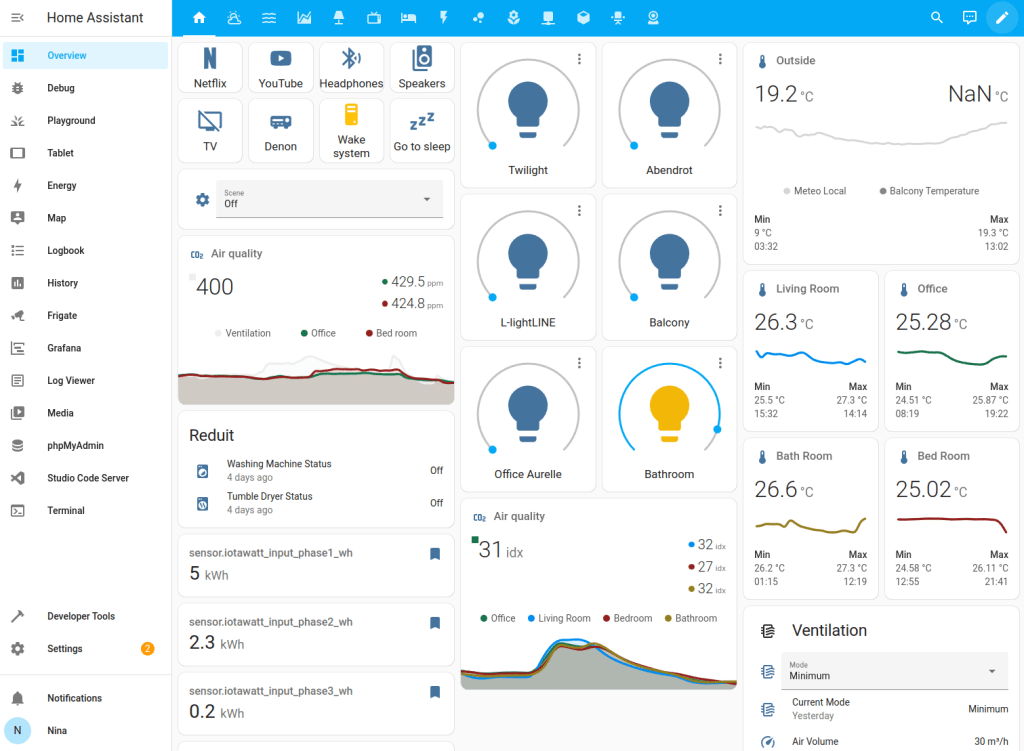
2. If you want the best smart home experience that will grow with you and allow you to implement of any automation you want, you will need to be technical, and all roads point to Home Assistant.
It is the most comprehensive DIY smart home platform which integrates with nearly all the other vendors platforms, creating a single interface to control your home.
Although it may break, when you do an upgrade to the next release, but this issue has become less common in the last year. But just be warned, you will always be tinkering, and you will go down some deep rabbit holes while you try and build capability, plus fix something that has broken, wasting many hours of your life you will not get back.
If you are that way inclined, then it does bring some satisfaction.
3. Finally, if you have some technical acumen, and you don’t need a lot, but are smart home curious and want to play, plus don’t want to spend too much money, you can choose the Tuya Smart Life platform. It will allow you to integrate some cheap wifi cameras, use motion sensors to turn on common area lights when you enter, buy appliances from Kogan, JB HiFI and others, and turn them on and off via your phone, along with integrating it all with Google speakers for voice control.
I will say, option 3 in Australia is not a bad solution and certainly cheap, and now we are seeing some electricians installing smart plugs and light switches using this platform, I actually see a possible end-to-end solution.
As a Product Manager, 6 months ago I had an idea that if I could devise a DIY smart home solution across a number of vendors, it could be packaged and sold to the non-technical buyer. What I learnt from the non-technical users, is they really don’t know what they want and when they have it installed it needs to be bullet-proof and just work.
I believe we are still in the early stages of the smart home market, and as AI and Machine Learning add process automation and make it ‘smarter’, we will all want to make our lives richer and more convenient. Meaning the smart home will only become a larger and more exciting market.
My next step in this journey. I will be investigating if we upskilled electricians to install more than just one or 2 plugs, could they become the integrator for the DIY smart home. Would this be viable for them, is there a market there?
 Notes from a mind that wanders | Simon Paynter
Leave a comment